
Prepare your business
for upcoming
E-invoicing in UAE
UAE is mandating e-invoicing for B2B and B2G businesses, Let’s prepare your billing software for the new changes.
The Federal Tax Authority(FTA) of the UAE has introduced E-invoicing for all businesses operating in the UAE, regardless of their VAT registration status. In this framework, the UAE has opted for the 5 Corner model. This includes 2 corners, one is the buyer and the second one is the seller. The other two corners are the Authorized Service Provider (ASP) of the buyer and as well as the seller. The final one is FTA. Most of the countries have different networks for e-invoicing. The network considered in the UAE for E-invoicing is the PEPPOL network, which is an EU-based network.
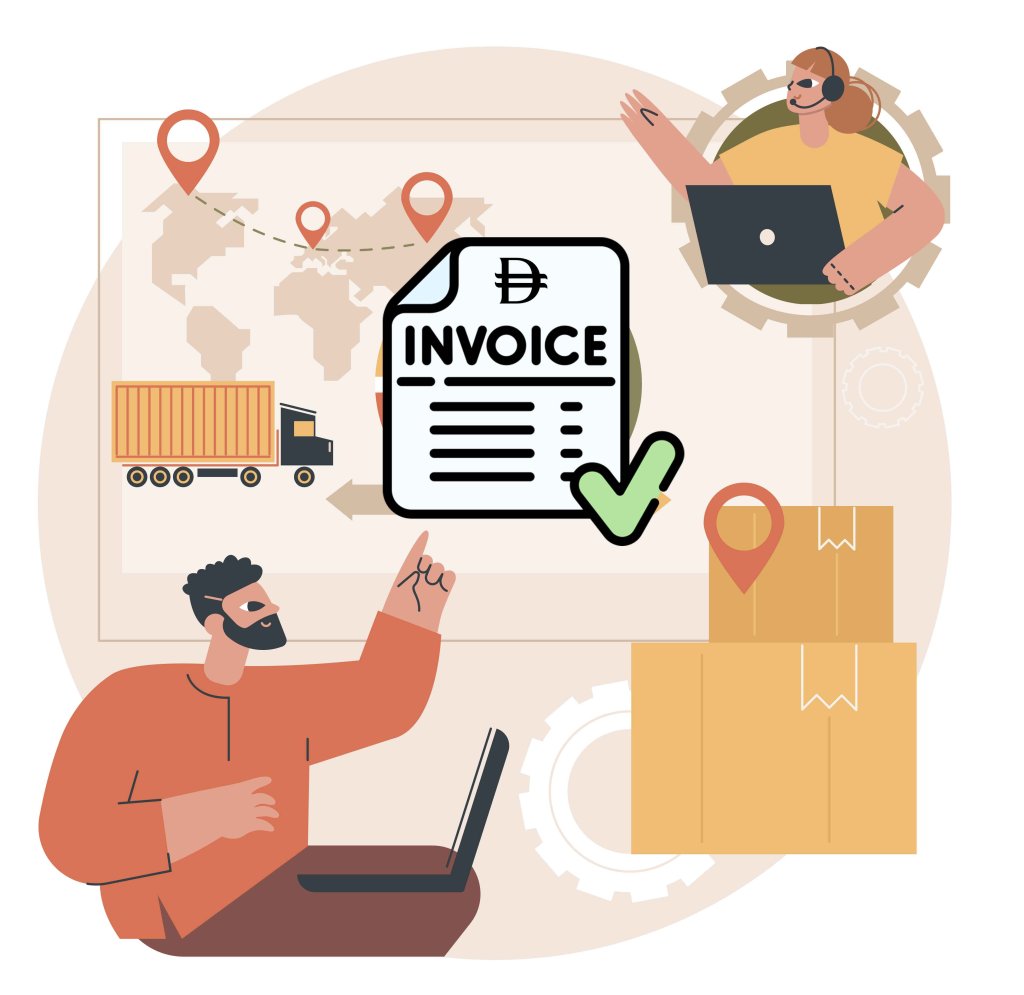
E-invoicing in UAE- How does it works?

The UAE is introducing a modern e-invoicing framework called the Decentralized Continuous Transaction Control and Exchange (DCTCE) model. This system is designed to ensure seamless, real-time exchange of invoices between businesses, their service providers, and the tax authority.
Here’s a step-by-step look at how the process works:
Supplier to Service Provider (C1 → C2)
The supplier (Corner 1) generates the invoice data (PINT AE format) and submits it to their UAE Accredited Service Provider (Corner 2).
Validation and Standardization (C2)
The service provider validates the invoice data and, if needed, converts it into the UAE standard eInvoice XML format.Exchange with Buyer’s Service Provider (C2 → C3)
Once validated, the invoice is transmitted to the buyer’s accredited service provider (Corner 3).
At the same time, Corner 2 also reports the Tax Data Document (TDD) to the UAE Tax Authority (Corner 5).Validation and Delivery (C3 → C4)
Corner 3 validates the invoice and sends a Message Level Status (MLS) back to Corner 2.If valid: The buyer (Corner 4) receives the invoice in their agreed format.
If invalid: A negative MLS is sent to both Corner 2 and the Tax Authority (Corner 5), and the TDD is not reported.
Tax Authority Reporting (C5)
Both Corner 2 and Corner 3 must submit TDDs to the UAE Tax Authority (Corner 5). Once received, C5 sends an MLS confirmation back to them.Feedback to Supplier and Buyer (C2 & C3)
Corner 2 forwards all exchange and reporting statuses to the supplier (C1).
Corner 3 forwards the reporting MLS from the tax authority to the buyer (C4).
UAE E-Invoicing Made Simple: Be ready before the UAE e-invoicing deadline
Peppol-Ready Solutions – We prepare your system for Peppol integration
End-to-End Support – From assessment to go-live
Experience in ZATCA E-invoicing in KSA – Proven track record in retail & enterprise
Get in touch
Interested in knowing more about preparing your billing system to be ready for e-invoicing? Drop your details here, and we will contact you soon.
UAE e-invoicing Timeline

Steps to Prepare Your Business for e-Invoicing in UAE
The UAE’s upcoming e-Invoicing mandate is designed to simplify invoicing, improve compliance, and reduce costs. To get your business ready, follow these key steps:
1. Understand the e-Invoicing Process and Data Requirements
Begin by familiarizing yourself with the UAE e-Invoicing model (DCTCE), invoice formats, and reporting obligations. Understanding these requirements ensures a smooth transition.
4. Conduct Testing and Validation
Before going live, conduct end-to-end testing with your provider. Test invoice creation, validation, and submission to ensure accuracy and compliance with the UAE Tax Authority’s requirements.
2. Choose an Accredited Service Provider and Sign a Contract
Select a UAE Accredited Service Provider that aligns with your business needs. Signing a contract is essential, as it defines the commercial terms, compliance responsibilities, and support services.
5. Enable Automatic Exchange and Reporting
Once validated, your provider will automatically exchange eInvoices between supplier and buyer, while also reporting the Tax Data Document (TDD) to the Federal Tax Authority (FTA).
3. Implement e-Invoicing with Your Service Provider
Work with your selected provider to integrate e-Invoicing into your business systems. This includes configuring ERP, POS, or accounting software to generate compliant eInvoices.
6. Utilize e-Invoicing for Business Efficiency
After implementation, use e-Invoicing to streamline operations, optimize invoice handling, and lower the cost of invoice production. This will not only improve compliance but also drive business efficiency.
Frequently Asked Questions
E-invoice or electronic invoice is a digital copy of the traditional paper invoice. This e-invoice can be exchanged between the seller and the buyer. E-invoice will contain encrypted data which may be in XML or JSON file format.
PEPPOL, which stands for Pan- European Public Procurement Online,is a highly secure network which enables the efficient electronic exchange of invoices, POs, and other business documents.
UAE is going to mandate e-invoicing for all Business-to-Business(B2B) and Business-to-Government(B2G)
E-invoicing is very beneficial for the businesses because it avoids the errors which occurs during manual entry, fraudulance, reduced costs, faster processing,etc.E-invoicing reduces the taxgap.
UAE is going to mandating e-invoicing for all the B2B and B2G businesses regardless of the TAX payment bar.
UAE will soon publish the list of accredited service providers list in MoF website. Businesses can check the website and choose a reliable, expericed ASP from the list.
Integration in these cases is typically implemented via APIs, web interfaces, or SFTP/ETL methods. The interface between Corner 1 (supplier) and Corner 2 (supplier ASP) , Corner 3 (buyer ASP) and Corner 4 (buyer) is not regulated by the MoF or FTA. The interface between seller ASP and Buyer ASP is regulated by the Peppol using the Peppol AS4 protocol. The conncetion between the seller ASP C5 is regulated by FTA using the Peppol AS4 protocol.
No, only an Accredited Service Provider can do the e-invoice integration. These ASPs will be listed in the UAE MoF website once all the accreditation procedures are completed. Businesses can approach them to avail the service.
The Tax Identfier Number will be the unique identifier number for the businesses. For the businesses which are not registered with the FTA (i.e they don’t have aa TRN), need to register with the FTA to get a TIN.