
How Real-time Occupancy Monitoring can transform your Retail business to new heights

Retail is evolving into a new phase by adapting to technological inventions and customer preferences. Sticking to traditional retailing techniques won’t help any business grow in this AI era. Online stores hit the No.1 position for the favorite shopping method for Genz customers. So, brick-and-mortar stores are experimenting with new ways to attract their niche customers. Here comes the importance of real-time occupancy monitoring in retail. To stay competitive in the current retail landscape, the foremost thing is how well you are utilizing technological advancements to grow and optimize your business.
What is real-time occupancy monitoring?
The term “real-time occupancy” refers to the number of people occupied in a particular space in real-time. Let’s check how this term is modified in retail. In retail, real-time occupancy monitoring is not just head counting and giving a number representing the no.of visitors in your store in real-time. Advanced real-time occupancy monitoring systems monitor, analyze, alert, optimize, and predict. Those come with powerful features that provide you insights into your customer journey, customer demographics, store layout, staff allocation, inventory management, etc.
What are the benefits of real-time occupancy monitoring?
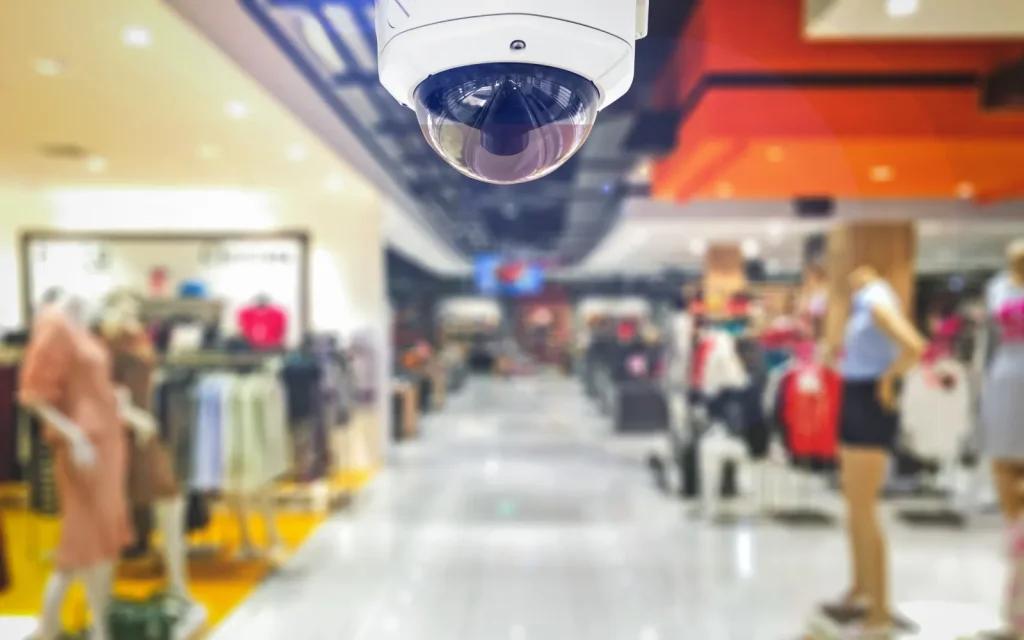
Real-time occupancy monitoring offers a plethora of benefits for retail businesses. Let’s check the major ones.
1. Operational efficiency:
The basic feature of any real-time occupancy monitoring system will be maintaining the optimal occupancy level to efficiently manage store operations. This will keep the store away from overcrowded scenarios.
Calculating the peak hours will enable the retailer to allocate more staff and more checkout counters to reduce wait time. The advanced systems come with AI and machine learning algorithms that provide predictive analysis reports, which can be beneficial for promotional marketing, flash sales, personalized marketing, etc.
2. Customer engagement:
The ultimate target of any retail IT solution is to increase sales by attracting customers to the brand. Engaging a customer with a brand depends on how well the customer is treated and satisfied with the shopping experience. Apart from the quality of a product, a loyal customer is generated through a seamless shopping experience.

Advanced AI-powered real-time occupancy monitoring systems equipped with people counting sensors are capable of calculating how much time a customer spends in the store, which age group people are mostly visiting, peak hours, how the store layout is helping customers to shop easily, how to manage the inventory to seek more attention from customers, etc.
3. Enhanced security:
The advanced real-time occupancy monitoring systems monitor the visitor count in the store. Counts the people who get in and exit the store, and alerts the authorities or displays on signage when it exceeds the limit. It avoids overcrowding scenarios and ensures safe and smooth shopping for the customers.
4. Promotional marketing:
The peak hours can be easily calculated with the insights from the occupancy systems. This kind of insight can be used to strategically plan the next promotions and flash sales. By integrating with POS systems and loyalty programs, retailers can generate personalized promotions for frequent buyers to make them loyal customers.
5. Predictive analysis:
Occupancy counters have a data pool about store occupancy and visiting time metrics. By combining these insights, AI algorithms can generate reports on future occupancy counts, peak times, etc. The advanced AI-enabled occupancy counters can generate predictive analysis reports.
6. Inventory management and store layout:
Store layout is an important factor in customer engagement. Occupancy counter data can be used to find out how long customers are spending time in the store, which area is more focused, which area gets less focused, etc. These insights help retailers understand how well the store layout benefits customers in shopping smoothly. Retailers can manage the inventory properly by analyzing how much time each customer is spending on specific areas. Product mixing can be easily implemented based on this.
7. Staff exclusion:
Traditional occupancy counters won’t exclude the staff from counting, so we won’t get accurate visitor count data. Modern occupancy counters are capable of excluding the staff in the store using RFID/BLE tags.
Occupancy monitoring systems are getting more advanced over time. It became a valuable tool for modern retailers to manage their stores efficiently. If you are eager to know how it performs for your store, please don’t hesitate to contact us. We will guide you to the best real-time occupancy counter currently available in the global market.
Related Posts

Inditech Middle East Achieves ISO/IEC 27001:2022 Certification: Raising the Bar for Retail IT Security in the GCC.
Inditech Middle East Achieves ISO/IEC 27001:2022 Certification: Raising the Bar for Retail IT Security in…

Beyond Points and Discounts: Building Real Customer Loyalty in the UAE
Beyond Points and Discounts: Building Real Customer Loyalty in the UAE Most loyalty programs in…

5 Signs Your UAE Retail Business Needs POS-Ecommerce Integration
5 Signs Your UAE Retail Business Needs POS-Ecommerce Integration If you're running a shop and…